
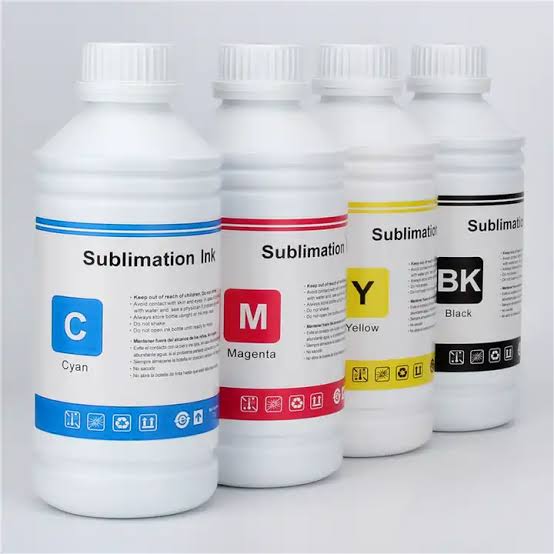
Main Features
- Ultra-Vibrant & True Colors: Engineered to deliver high color saturation, deep blacks, and bright, accurate tones that pop on any white or light-colored substrate.
- Superb Fade Resistance: The ink infuses directly into the material rather than sitting on top, making your prints 100% waterproof, scratch-resistant, and safe for machine washing or dishwashers.
- Anti-Clogging Formula: Features a micro-filtration process that prevents printhead nozzles from clogging, ensuring stable, smooth, and continuous ink flow.
- High Transfer Rate: Offers an exceptionally high transfer efficiency rate, leaving minimal ink residue on the sublimation paper and saving you production costs.
- Wide Compatibility: Works perfectly with all major piezoceramic printhead printers (such as Epson EcoTank series) and high-quality sublimation transfer papers.
Product Description
Introduction to Sublimation Technology
Sublimation printing represents a pinnacle of modern digital textile and product customization. At the absolute core of this technology is Sublimation Ink, a highly specialized, formulation-driven fluid designed to transform digital artwork into permanent, vibrant, and indestructible physical prints. Unlike traditional inkjet printing, which deposits liquid dye or solid pigment particles onto the surface of a substrate, sublimation ink operates on the molecular level. It penetrates, binds with, and becomes an inseparable part of the material it is applied to.
The term “sublimation” itself describes a chemical phenomenon where a substance transitions directly from a solid phase to a gaseous phase without ever passing through an intermediate liquid state. In the context of printing, this ink is first jetted onto a temporary carrier—known as sublimation transfer paper. When subjected to intense heat and precise pressure, the solid dye particles embedded in the paper instantly volatilize into a gas, infusing themselves deeply into the synthetic fibers or specialized coatings nearby. This document serves as a comprehensive, high-density resource detailing the science, composition, application, compatibility, and troubleshooting methodologies associated with premium digital sublimation inks.
Section 2: Chemical Composition and Molecular Science
To understand the performance of premium sublimation ink, one must analyze its complex chemical architecture. Sublimation ink is fundamentally an aqueous (water-based) carrier fluid holding microscopic particles of highly specialized disperse dyes.
Micro-Disperse Dyes (10% – 40%)
The primary colorants are solid dye crystals pulverized to a sub-micron scale (typically under 100 to 200 nanometers). Because these dyes are completely insoluble in water, they must be suspended evenly throughout the fluid. Premium formulations utilize proprietary grinding technologies to ensure uniform particle size, preventing agglomeration which leads to disastrous printhead clogging.
Aqueous Carrier Liquid & Humectants (40% – 70%)
Ultra-pure, deionized water acts as the main vehicle delivering the dye particles through the printer architecture. To prevent this water from evaporating prematurely at the printhead nozzles, heavy humectants—such as glycerol, propylene glycol, or diethylene glycol—are blended into the formula. These compounds maintain fluid moisture and regulate viscosity.
Surfactants & Dispersing Agents (1% – 5%)
These surface-active agents lower the surface tension of the ink, enabling uniform drop formation (droplet jetting) from the microscopic nozzles of a printhead. Dispersing agents wrap around the individual dye particles, creating electrostatic or steric repulsion that keeps the particles perfectly suspended and prevents them from settling over time.
Biocides & Fungicides (<1%)
Because the ink is water-based and stored at room temperature, it is susceptible to microbial growth. Organic biocides are added to inhibit the growth of bacteria and fungi, extending the shelf-life of the ink up to 12 to 24 months.
Section 3: The Sublimation Process (Step-by-Step Science)
The physical transition of sublimation ink requires three structural variables: Time, Temperature, and Pressure.
[Digital Image] ➔ [Epson/Piezo Printer with Sublimation Ink] ➔ [Printed Sublimation Paper]
                                                                        │
[Finished Permanent Product] 🖶 [Heat Press: 180°C - 200°C + Pressure] ◄┘
- The Digital Print: The ink is jetted onto a specialized sublimation paper. At this stage, the print often looks dull, washed out, or inaccurately colored (e.g., black ink might look brown or dark green). This is completely normal; the true chemical colors are only activated by extreme heat.
- The Thermal Activation: The printed paper is placed face-down on a polyester fabric or polymer-coated hard substrate and loaded into a mechanical heat press. The temperature is elevated to a critical window—typically between 180°C to 200°C (356°F to 392°F).
- The Polymer Opening: Under this extreme heat, two things happen simultaneously. First, the solid dye particles on the paper sublimate into a highly reactive gas. Second, the synthetic polymer chains of the polyester fabric or rigid coating relax, causing their molecular pores to open wide.
- The Molecular Infusion: Heavy mechanical pressure forces the trapped dye gas directly into these open molecular pores. The gas molecules cross-link with the polymer molecules.
- The Permanent Solidification: Once the heat press is opened, the temperature drops instantly. The polymer pores snap shut, trapping the dye inside. The dye gas reverts back into a solid state inside the material. The design is now embedded permanently inside the polymer matrix.
Section 4: Key Performance Characteristics & Advantages
When compared to alternative printing methodologies like Direct-to-Garment (DTG), Screen Printing, or Heat Transfer Vinyl (HTV), premium sublimation ink offers unparalleled technical benefits.
- Zero Hand Feel (Texture-Free): Because the ink resides inside the fibers rather than sitting on top, the printed area remains identical in texture to the unprinted area. The fabric retains its original softness, breathability, and stretchability.
- Exceptional Longevity and Washability: Sublimation prints cannot crack, peel, flake, or delaminate. The print lasts as long as the product itself. It easily survives hundreds of industrial wash cycles, harsh detergents, UV sun exposure, and dishwasher cycles without fading.
- High Ink Transfer Efficiency: High-density ink formulations boast a transfer rate exceeding 95%. This means nearly all the ink vaporizes off the carrier paper and bonds with the substrate, minimizing waste and ensuring maximum visual density with less ink volume.
- Ultra-Wide Color Gamut & High Optical Density: High-grade inks feature rich color saturation and Deep Black (K) optimization. They allow for photo-realistic printing with smooth gradients, complex shadows, and sharp, crisp vector lines.
Section 5: Substrate Compatibility Matrix
Sublimation ink is chemically bound to find and stick to synthetic polymers. It will completely fail to adhere to natural fibers without chemical assistance.
| Substrate Category | Examples / Common Items | Preparation / Technical Requirements |
|---|---|---|
| Synthetic Apparel | Sportswear, jerseys, mousepads, hoodies, tote bags | Must consist of at least 70% Polyester. 100% Polyester yields the most vibrant results. Natural fibers like 100% Cotton will wash away entirely. |
| Ceramics & Glass | Coffee mugs, plates, beer steins, glass photo frames | Must be factory-pretreated with a clear, smooth polyester/polyurethane hard coat. Raw ceramic will not accept the ink. |
| Metals | Aluminum photo sheets, stainless steel tumblers, license plates | Requires a specialized sublimation-receptive polymer powder coating or liquid lacquer finish. |
| Rigid Plastics | Polymer phone cases, fiberglass tags, acrylic blanks | The polymer must be heat-stable up to 200°C without melting or deforming under mechanical pressure. |
Section 6: Hardware and Hardware Constraints
Sublimation ink cannot be used in just any standard desktop printer. It is strictly constrained by the type of printhead technology utilized by the manufacturer.
Micro-Piezo Printheads (Mandatory)
Sublimation inks require Piezoelectric printheads (most notably found in Epson EcoTank, WorkForce, and dedicated Sawgrass or Mimaki systems). Piezo printheads use a mechanical pulse (electric crystallization change) to physically push the ink droplets out of the nozzle. Because no heat is generated during jetting, the ink remains stable inside the printer.
Thermal Printheads (Incompatible)
Printers made by HP, Canon, or Lexmark typically use Thermal printheads. These printheads boil the ink inside the nozzle to create a vapor bubble that forces the drop out. If you put sublimation ink into a thermal printer, the ink will sublimate inside the printhead, instantly baking the dye onto the nozzle walls and permanently destroying the hardware components.
Section 7: Storage, Maintenance, and Troubleshooting
To maintain operational efficiency and avoid costly downtime, users must adhere to strict maintenance and storage protocols.
Storage Specifications
- Temperature: Keep ink containers stored between 15°C to 25°C (59°F to 77°F). Exposure to freezing conditions can cause the dye particles to fall out of suspension, while extreme heat can accelerate drying inside the bottles.
- Sunlight: Store in a cool, dark location away from direct sunlight and UV radiation, which can destabilize the aqueous chemical bonds.
- Agitation: Shake ink bottles gently once a month to ensure any minor settling of the micro-disperse dyes is fully redistributed before refilling systems.
Common Troubleshooting Protocols
- Nozzle Checks & Head Clogs: If a printer is left idle for weeks, water from the ink nozzles can evaporate, leaving dry crusts of dye. Run weekly nozzle checks and occasional printhead cleanings to pull fresh ink through the system.
- Color Accuracy / ICC Profiles: Because sublimation ink looks drastically different before and after heat activation, a custom ICC Color Profile is mandatory. This digital profile translates computer colors to compensate for the thermal shifts of the specific ink brand, ensuring your final reds, blues, and skin tones are perfectly accurate.
- Moisture Issues: If the sublimation paper absorbs room humidity, it can cause the ink to sputter when heated, creating small dots, tracking lines, or color bleed. Keep paper sealed dry and pre-press fabrics for 5 seconds to evaporate moisture before applying sublimation prints.